/*Sign up for the DataFlex Newsletter*/
Sign up to stay informed about the latest news and events!

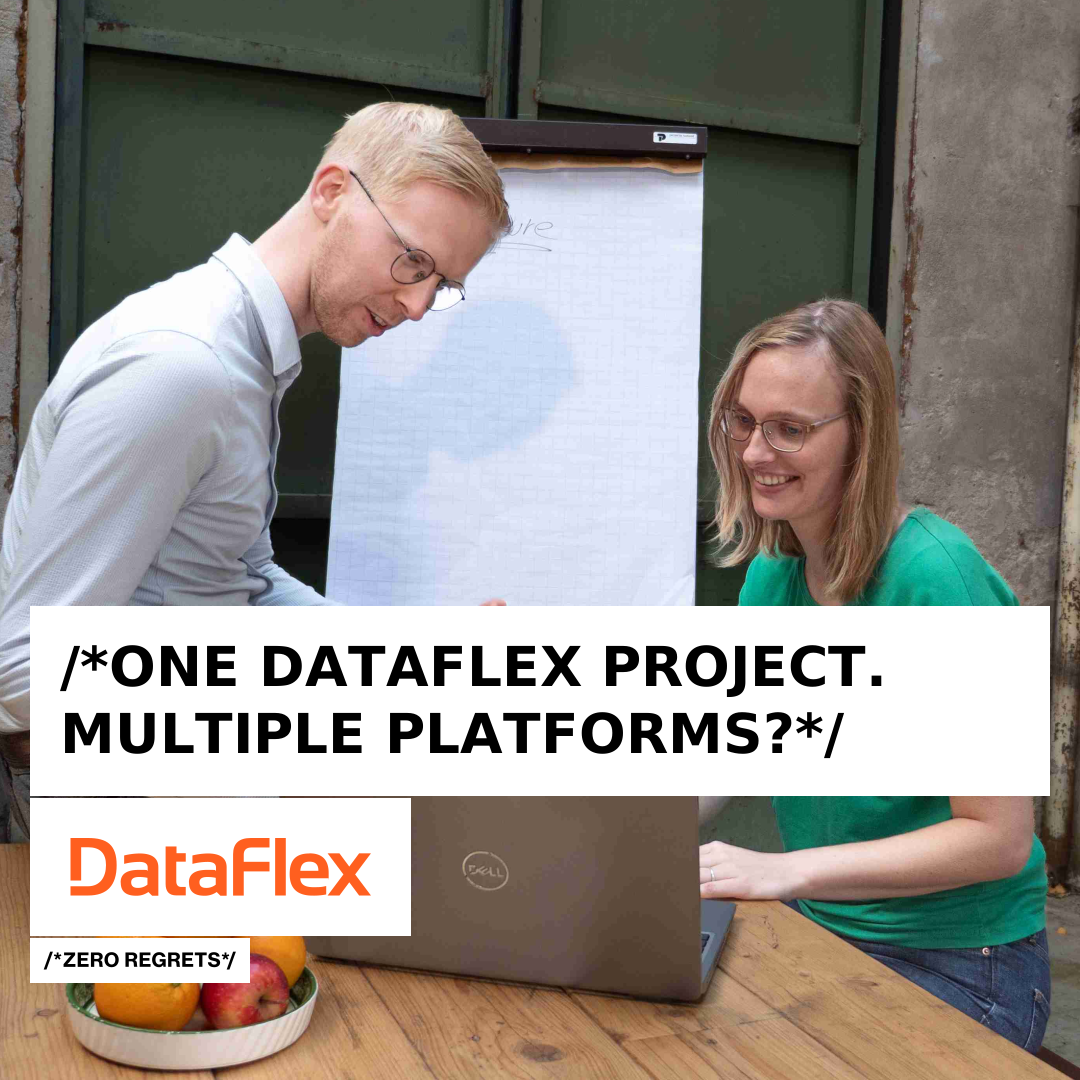
This FlexRoads 2026 session summary looks at how Jip Spel has been working on the evolution of the DataFlex technology stack, focusing on multi-platform support, development workflows and external classes. These areas are important steps in making the platform more flexible while keeping the familiar DataFlex development experience.
The session gives developers a closer look at the technical challenges behind these changes and the solutions being explored. From creating platform-independent projects to improving how code quality is maintained, the presentation shows how the foundations of the technology stack are being shaped. Watch the full session to see the demos and technical examples in action.
Supporting multiple platforms introduces an important challenge: developers want to work with the same DataFlex project, while the resulting application needs to run on different environments. The session explores how the technology stack is being adapted to support platforms such as Windows, Linux and macOS without requiring separate projects for each platform.
The approach keeps the development experience familiar while handling the platform-specific details behind the scenes. For developers, this means the focus remains on building applications rather than managing separate platform versions.
Adding support for more platforms also means making sure changes continue to work everywhere. The session highlights how automated workflows using Jenkins, GitLab and SonarQube help validate builds, run tests and check code quality before changes are merged.
This type of workflow is especially relevant for teams working on larger projects, where maintaining consistency and preventing platform-specific issues becomes increasingly important.
External classes introduce a new way to organize functionality in DataFlex. Instead of every component being part of the standard runtime, specific functionality can live in separate libraries and only be included when needed.
This creates more flexibility around how functionality is delivered and maintained. For example, updates to a specific component can be handled independently instead of requiring changes to the entire runtime.
The session also demonstrates how external classes work from both the DataFlex and library sides. Developers can interact with an external class in a familiar way, while the implementation remains separate behind the scenes.
Beyond the current implementation, this approach opens interesting possibilities for how functionality could be structured and shared in the future.
The evolution of the DataFlex Tech Stack is focused on creating a stronger foundation for future development while preserving the productivity developers know from DataFlex. Multi-platform support, improved tooling and modular components all address practical challenges developers face when building modern applications.
For DataFlex developers these changes are worth following because they influence how applications can be developed, maintained and extended over time.